


History of DBT
DBT stands for Dialectal Behavior Therapy and was created in the 1990s by Marsha Linehan. Linehan was inspired to create DBT after she worked with chronically suicidal and borderline personality disordered patients.
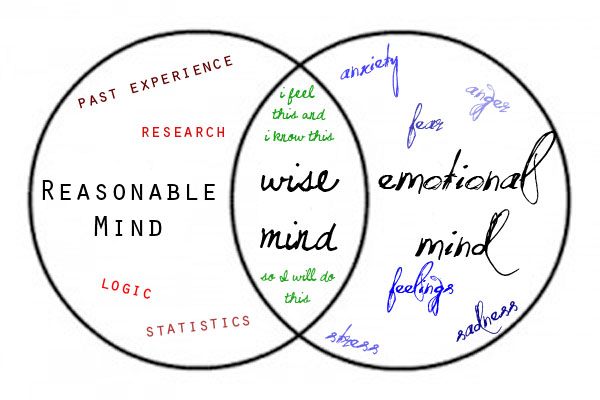
Three States of Mind
One of the skills presented in Dialectical Behavioral Therapy (DBT) is called the states of mind. The states of mind are broken up into a Venn diagram which include the rational mind, the emotional mind and the wise mind.

Dialectical Behavior Therapy
Dialectical Behavior Therapy or DBT is an evidence-based treatment that was created by Marsha Linehan in the 1980s. DBT was originally created to treat highly acute borderline personality disorder.

The Wise Mind
Dialectical Behavioral Therapy uses a concept called “The Wise Mind.” The Wise Mind is where your emotions and your intellect come together to create a balanced perspective.

Narrative Therapy
Narrative therapy is a medium for self-reflection and growth through stories or narratives (hence the name). The general idea is to change your perspective on your life by the way you tell your story.

I Want Therapy, How Do I start?
Therapy is designed to support you in the expedition of radically accepting yourself, including that funny little wart on the bottom of your toe. Many people have hesitations to starting therapy.

Understanding Your Window of Tolerance
The concept of the “Window of Tolerance” was first introduced by Daniel Siegel, a neuropsychiatrist and author, to describe a person's ability to regulate their emotions. It refers to the range of emotions and stress levels that an individual can tolerate without becoming overwhelmed.

Parents: They're Just People Too
When we are little kids, we look up to our parents for everything. Not only do we depend on them to meet our basic needs, but we tend to idealize them and see them as perfect and never failing.

Emotional Triggers: Why They Are Important and Why We Need to Understand Them
Understanding our emotional triggers and learning how to communicate our emotions to others when we feel triggered is an essential part of building and maintaining healthy relationships. We all have emotional triggers and sensitivities and they are different for each person.

The Myth About Therapy: “The One Session Fix”
I have spoken to and seen many clients who have never been to therapy before. Understandably it can be a scary and new thing to try, especially with most of the knowledge we have of therapy coming from movies, TV shows or some other form of media.